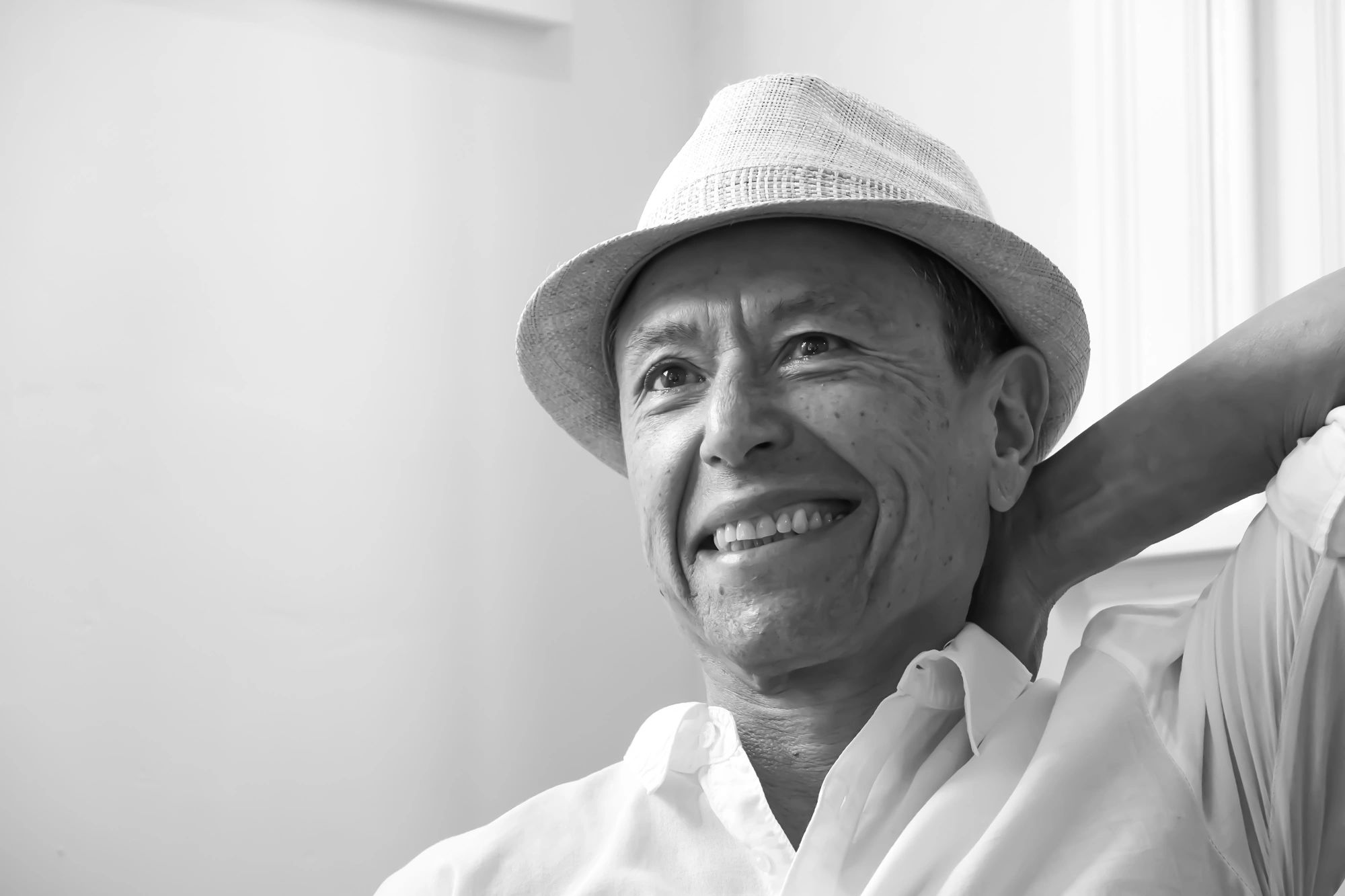
Welcome to my website.
Welcome to my website.

You know how it is when you start to write a story and you realize that you need to do some research, learn how to play the piano or skydive in order to get a grip on your subject? Well, when I began to think about writing a book about Alberto, I knew I couldn’t even write the first word without meeting Laronda. I also knew that once I met her, I would have no more excuses and would have to put it down on paper --my fellow pescaítos fritos wouldn’t let me off the hook. So I kept procrastinating until one day I got on BART at 16th Street and got off at downtown Oakland, which might as well be a foreign country since I hardly ever get out of the Mission anymore. My plan was to visit Ruben at...
The sound of a Safeway cart rolling down the empty streets of a sleeping city lost in the fog; a white silhouette pushing the cart with the urgency of a homeless bride in a hurry to get to her midnight wedding; the rattling of the cart drilling a hole into the heart of our collective memory; the floating wake of her white dress guiding us as we persisted in getting close to her, as close as one can get to an urban legend in the making, a myth soon to be rooted in the most inhospitable alleys and hours of the Mission —La Llorona, The Boogie Man’s Bride, Frida La Loca, a spooky, elusive specter condemned to push her cart full of brushes and paint cans in penance for our sins...
By the time Anaisneris arrived in El Castillo, we had seen Alberto go through enough deaths and resurrections (all of them over sentimental matters) to be keenly aware of a manic self-destructive/ self-reinventing pattern that offered very little hope of ending in any other way but tragedy. There was really nothing new about Alberto and Anaisneris’ orgasmic upward trajectory and dysfunctional fall from grace. Yet we did notice something ominously stubborn (in a new way) in how he clung to her when she no longer wanted him, something perhaps too overtly masochistic (suicidal if you wish) about his determination to bring upon himself the maximum amount of pain. We couldn't blame...
The ball. Bounce and rebound. Fast because it is against a wall and it’ll return everything you throw at it. It’ll defeat you no matter what, although it will always leave it up to you to decide when to walk away. I was at that point. Actually, I was past that point. My arm and wrist had already given up. I wasn’t going to quit, though. This girl at the other end of the wall had been at it when I arrived and was still going strong. I kept eyeing her. She wasn’t even sweating. She mixed up her shots with absolute control: forehands, backhands, serves, volleys, always hitting the wall at exactly the same spot, right between the
bathroom door and its only window...
I often wonder who I would be without this stubborn, perennial image—my mother in bed in the dark, lying like a corpse, only her eyes and her mouth moving, talking to me as if reminiscing yet at the same time prescribing a course for my life, perhaps anticipating losing me sooner rather than later, suspecting that our voices playing in the dark were all I’d be left with to explain my most intimate sense of loss.
“Think big, now, Quique. What would you like to study?”
“I don’t know, Mom. I already told you so many times.”
The image is persistent, almost perverse in the way it insists of being the first: the night like an empty, ancient, abandoned theater and my mother in her enormous bed, lying like a corpse, moving only her lips and her eyes, talking to me as if remembering yet, at the same time, prescribing a rodad to follow...
The story of how carnaval came to be in San F
Nací el 57, en Tacna, frontera sur del Perú, Takana para los antiguos moradores de este valle en medio de un desierto picante y prácticamente infinito. Por el lado de mi padre, mi familia proviene de la sierra central del Perú, gente industriosa, buena para los negocios y para meter juicios, unos más zambos, blanquiñosos o indios que otros. Por el lado de mi madre, mi abuela es descendiente de esclavos africanos afincados en Coquimbo, Chile. Nadie sabe dónde nació mi abuelo, pero como hijo de inmigrantes ingleses, imagino que proviene también del sur. Es decir, desde niño fui muy consciente de ser producto de una realidad fronteriza en la que se mezclan mil leches.
Para complicar más mi identidad fronteriza, desde los dieciocho años vivo en el Área de la Bahía de San Francisco. Mejor dicho, fui hecho en Tacna y re-hecho en California, amerincaico total, agradecido de que Tacna y Arica, la ciudad vecina al otro lado de la frontera, me dieran la oportunidad de enamorarme de la literatura a muy temprana edad, y de que San Francisco me brindara la oportunidad de concebir lo inconcebible: ser escritor, en dos idiomas, para mayor concha.
Miscelánea
-He trabajado principalmente como catedrático y periodista cultural. En los últimos años también me dedico con igual fervor y disciplina a la fotografía. Cuando no estoy escribiendo o sacando fotos, me gusta pensar que estoy bailando o esuchando música, preferentemente la que nace de la diáspora africana.
Publicaciones
-Mientras Elena en su lecho, novela ganadora del Premio Letras de Oro. Primera edición, Universidad de Miami, 1996. Segunda edición, Cuadernos del Sur, Tacna, Perú, Febrero 2024.
-Sueños de arena, cuentos, Cuadernos del Sur, Tacna, Perú, Noviembre 2026.
Fotografía
Si quieres visitar mi sitio dedicado a la fografia: lizarragaphotography.com